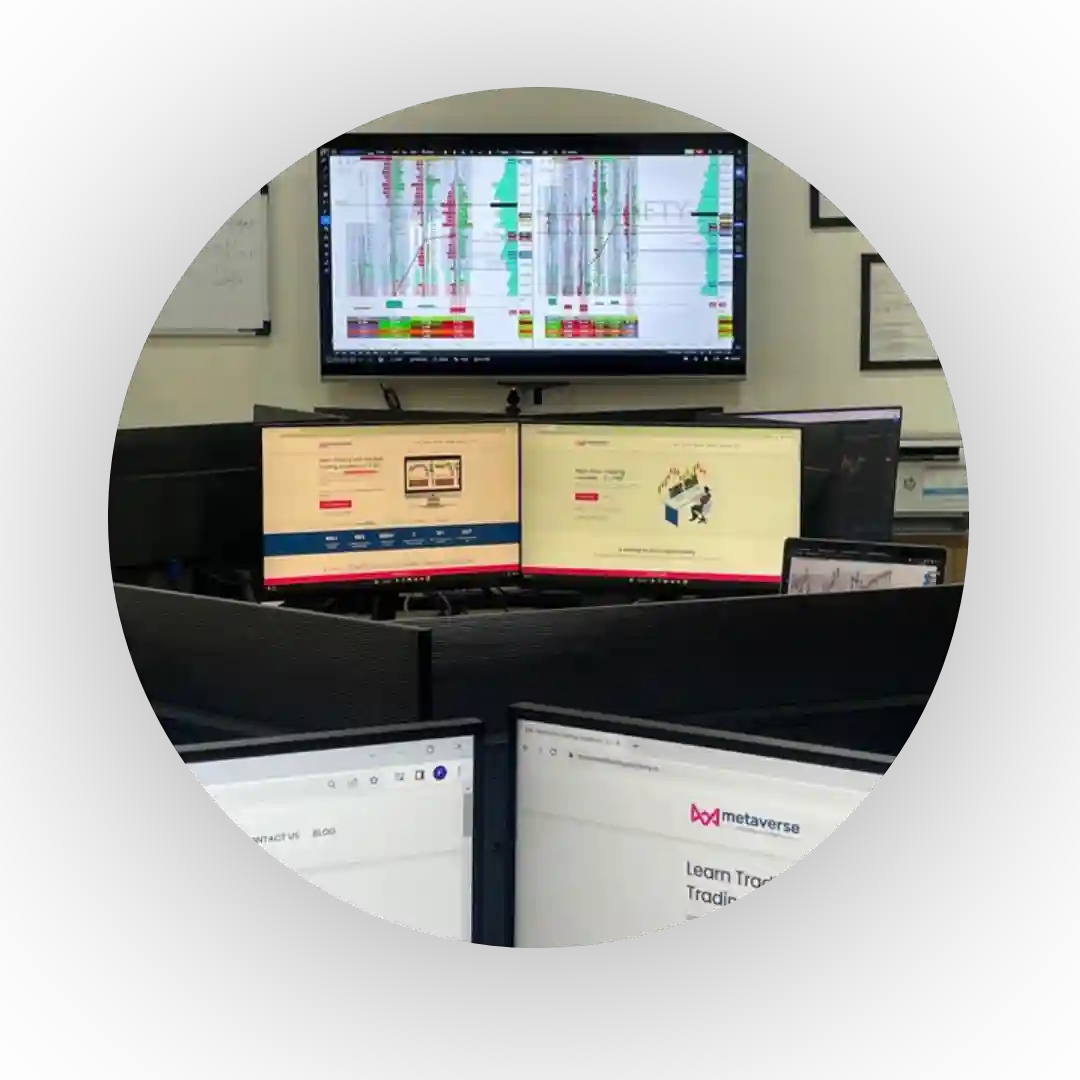
Metaverse Trading Academy is best trading academy in india to learn stock trading using order flow, market profile, volume profile, option chain etc.
Rajkot, Gujarat, India

Is trading a good career in India? The honest answer is yes, but only for a small percentage of people who treat it like a serious skill-based profession, not a shortcut to quick money.
Trading can offer flexibility, independence, and high upside. At the same time, it comes with unstable income, emotional pressure, and a very high failure rate for underprepared beginners. SEBI’s research has already shown that most individual F&O traders lose money, which is why this career path demands far more discipline than social media often suggests.
In this guide, we break down the real pros, cons, income potential, required skills, and career options so you can decide whether trading as a career in India truly fits your goals.
Trading can be a good career in India for disciplined people with strong risk management, emotional control, and enough capital to survive the learning phase. It is not a dependable career choice for people looking for fixed monthly income, quick profits, or low-risk work.
If you want stability, structured growth, and employee benefits, a salaried market role may be a better fit. If you are comfortable with uncertainty and performance-based income, trading may become a viable long-term path.

Trading as a career in India can take different forms. Some people trade independently using their own capital. Others work inside brokerages, prop firms, or institutional desks.
Common career paths include:
If you are still comparing paths, read types of traders in the stock market to understand which style fits your personality and risk level.

Trading attracts people for good reasons. When approached professionally, it offers advantages that many traditional jobs do not.
If you are new, it also helps to understand the difference between trading and investing before choosing this path.

While enticing, trading as career presents notable challenges that warrant serious consideration:
Key takeaways for a practical view:
A related read here is how much capital you need to start trading in India, because capital planning is one of the biggest filters between hobby trading and career trading.
Yes, stock trading can be profitable in India. But profitable trading and sustainable career trading are not the same thing.
A person may make money in a few trades or during a strong market phase. A career trader, however, needs a repeatable process, risk controls, and the ability to perform across changing market conditions.
That is why the better question is not “Can trading make money?” The better question is “Can I trade profitably and consistently enough, after costs and losses, to support my life?”
For most people, that takes years, not weeks.
Success in trading as career depends less on degrees and more on a blend of technical and psychological skills:
To strengthen this section naturally, link to risk management in trading and discipline in trading.
You do not need a formal degree to become an independent trader. However, certifications can still improve your understanding and credibility.
NISM offers official securities-market certification programs in India, including derivatives-related certifications, which can be useful if you want a stronger educational base or a more formal entry into market-related roles.
NISM certification benefits: do you need it as a trader?
Trading is not better than a job for everyone. It depends on what you value more.
If you want stable monthly income, structured growth, and lower uncertainty, a salaried role is usually better.
If you value autonomy, performance-based upside, and independent decision-making, trading may appeal more, but only if you are financially and mentally prepared for volatility.
For many people, the smarter transition is gradual. Keep your primary job, learn trading seriously, and move full time only after proving consistency over a long period.
Risk management is the backbone of sustainable trading as career. Misjudging risk can quickly erase capital and morale.
Cultivating realistic expectations is essential. Unlike some portrayals, trading as career does not instantly yield wealth. Most successful traders experience years of trial, error, and measured growth.
Mapping a systematic approach to launching trading as career enhances your chances of longevity and profitability.

Pursuing trading as career presents both lifestyle benefits and stressors. Understanding and managing these can be pivotal:
Mitigation strategies:
First-hand accounts and industry insight offer practical wisdom for those contemplating trading as career:
Yes, trading can be a good career in India, but only when approached as a high-skill, high-risk profession.
It is not a shortcut to wealth. It is not a guaranteed income source. And it is definitely not suitable for everyone.
Trading makes the most sense for people who are disciplined, patient, financially prepared, and comfortable with uncertainty. If that does not sound like you yet, there is nothing wrong with learning part time while keeping another source of income.
The real edge in trading is not excitement. It is preparation, risk control, and consistency.
Trading can be a good long-term career for some beginners, but it should not be treated as a quick-income option. Most beginners need time to develop discipline, strategy, and risk control.
Yes, you can do stock trading as a full-time career in India. However, it is only practical when you have enough capital, a tested strategy, and the emotional ability to handle income fluctuations.
Trader income in India varies widely. Beginners may earn nothing or incur losses, while experienced traders or employed traders at firms may earn significantly more depending on role, capital, and performance. Reported salaried trader pay in major cities shows a broad range rather than a fixed benchmark.
No, a degree is not mandatory for independent trading. But certifications and financial market education can still help improve knowledge and credibility.
Most traders fail because of poor risk management, lack of discipline, emotional trading, unrealistic expectations, and insufficient preparation. SEBI’s findings on F&O losses reinforce how difficult this field really is.
So, is trading a good career in India? It can be, but only for the few who build the right habits, protect capital, and stay realistic about the journey.
If you are considering trading as a career, start with education, not ego. Learn the basics, practice with small risk, study psychology, and build systems before expecting income. Done properly, trading can grow into a serious profession. Done casually, it can become an expensive lesson.
If you are at the beginning of the journey, start by understanding your setup, your capital, and your mindset before you decide whether trading should be your side skill or your full-time career.


Disclaimer: Investing/Trading in the stock market is subject to market risks, and there is no assurance or guarantee of returns—neither the principal nor the appreciation of the investments. The content/education/training provided by Metaverse Trading Academy, its institute, mentors, trainers, representatives, or their assigns is solely for general interest, educational purposes, and the reader’s information. All participants are requested to seek independent expert opinions before acting on anything mentioned in this course/program. We are not liable or responsible for any decisions made by the participant solely based on the information provided here. All information/views/opinions shared in the course/program are our interpretation for educational understanding only, and we cannot be held responsible for any miscommunication, misinformation, misunderstanding, or any actions taken by an individual or group based on the course/program. By enrolling in and accessing the program/course, you accept this “Disclaimer,” without limitation or qualification. Upon viewing this disclaimer, you understand and acknowledge that there is a very high degree of risk involved if any information is misinterpreted, misused, or applied without proper risk management and independent judgment. As stipulated by law, Metaverse Trading Academy cannot and does not make any guarantees about your ability to get results or earn money with any ideas, information, tools, indicators, systems, or strategies from the course/program. The participant should understand that all ideas, information, tools, strategies, examples, and market discussions shared during the course/program are for educational and informational purposes only. Metaverse Trading Academy, its founders, mentors, trainers, management, and team members are neither responsible nor liable for any losses, damages, or consequences resulting from investments or trading activities. You alone are fully responsible and accountable for your decisions, actions, trades, investments, and results in life. By registering here, enrolling in any program, or accessing any material, you agree not to attempt to hold Metaverse Trading Academy, its founders, mentors, trainers, management, or team liable for your decisions, actions, or results, at any time, under any circumstance.