Metaverse Trading Academy is best trading academy in india to learn stock trading using order flow, market profile, volume profile, option chain etc.
Rajkot, Gujarat, India

If you are planning to enter the Indian stock market, the first real question is not which stock to buy. It is how much capital you need to start trading in India without putting yourself in a risky corner.
Yes, some brokers let you open an account with a very small deposit. But practical trading capital is different from account opening money. Your starting capital must cover the trade itself, trading charges, and a buffer for market volatility. Most importantly, it must support risk management so you do not blow up your account in the first few weeks.
This guide breaks down the minimum capital for trading in India by trading type, explains what “capital” actually includes, and gives a realistic starting plan whether you begin with ₹500, ₹10,000, or ₹1,00,000.

When people ask “how much money is needed to start trading in India,” they often mean only the amount required to place a trade. In reality, trading capital includes four parts:
If you ignore charges, you will overtrade. If you ignore risk capital, you will take oversized positions. If you ignore reserve buffer, one volatile day can force you to close trades at the worst time.
If you want a clean breakdown of costs per trade and how charges add up, keep a tab open on this guide to trading charges in India explained and refer to it when planning position size.
You can start learning with ₹500 if your goal is experience, not income. Use it to understand order placement, price movement, and emotions with real money on the line.
But if your goal is to trade consistently with risk rules, here is a more realistic baseline:
The right number depends on your trading style, segment, and risk appetite.
Here is a practical, beginner friendly table you can use to set expectations.
| Trading Type | Practical Minimum Capital | Why This Range Makes Sense |
|---|---|---|
| Learning with real money in cash segment | ₹500 to ₹5,000 | Lets you practice order flow and psychology with low risk |
| Equity delivery investing | ₹5,000 to ₹25,000 | Enough to buy a few quality stocks and diversify slightly |
| Intraday equity trading | ₹25,000 to ₹75,000 | Supports stop loss based position sizing and trading costs |
| Swing trading in equities | ₹15,000 to ₹50,000 | Allows holding through pullbacks and avoiding forced exits |
| Options buying | ₹15,000 to ₹50,000 | Premiums plus repeated attempts require a capital cushion |
| Options selling | ₹1,00,000 to ₹5,00,000 | Margin requirement plus drawdown buffer is essential |
| Equity futures | ₹1,00,000 to ₹3,00,000 | Margin plus volatility can hit quickly, buffer matters |
| Currency derivatives | ₹10,000 to ₹50,000 | Lower contract values, but still needs risk buffer |
| Commodity trading | ₹25,000 to ₹2,00,000 | Margin varies widely by commodity and volatility |
These are practical ranges, not broker marketing minimums. Your goal is survival first, profitability later.
Your style determines how often you trade and how tight your stops need to be.
If you are still deciding your style, read difference between trading and investing and choose a path that matches your temperament, not just your income goals.
A sustainable approach is risking a small percentage of capital per trade.
Common rule used by disciplined traders:
This only works when capital is large enough to keep stop losses meaningful. With very small capital, traders either set unrealistic stops or oversize positions.
To build this properly, use a clear risk framework like the one explained in risk management in trading.
Equity delivery needs full payment. Derivatives need margin. But margin is not a discount. It is leverage, and leverage amplifies mistakes.
Options selling and futures trading require the highest buffers because:
Costs quietly kill small accounts.
Even if your strategy has a small edge, fees and slippage can erase it when your capital is low and frequency is high. That is why intraday trading often needs more capital than beginners assume.
Best for beginners who want slower decisions.
A good range to start: ₹10,000 to ₹50,000
Intraday is not about minimum deposit. It is about being able to place trades with controlled loss.
You need capital for:
A good range to start: ₹25,000 to ₹75,000
Options buying feels cheap because the premium looks small. The real risk is repeated losses and impulsive revenge trades.
Start only if you can commit to:
A good range to start: ₹15,000 to ₹50,000
This is where many accounts blow up.
Even if margin is available, you need capital for:
A safer range to start: ₹1,00,000 to ₹5,00,000 depending on instrument and lot size.
Your mission is skill building.
If you want structured practice before risking larger money, start with how to do trading with demo account and then shift to tiny live trades.
You can trade equities with real risk rules.
You can begin a serious routine in equities or conservative options buying.
To refine this, use a clear guide for structuring trades such as risk reward ratio in trading.
You have flexibility, but you still need discipline.
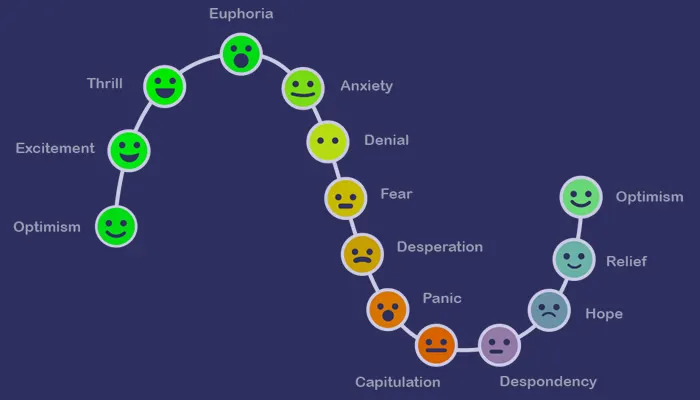
Capital should buy you time to learn. If your capital is too small for your style, you will be pushed into emotional decisions.
Here is the honest summary most beginners benefit from:
If your goal is to make trading a structured skill rather than a gamble, build a learning path and stick to it. If you want a guided approach with defined milestones, see how a structured program works in trading training.
You can start learning with as little as ₹500 to ₹1,000 in equity cash, but for practical trading with risk control, ₹10,000 to ₹25,000 is a safer starting range.
For intraday, a practical starting capital is ₹25,000 to ₹75,000 so you can manage stop loss based position sizing and absorb brokerage and trading charges without overtrading.
For options buying, many beginners start around ₹15,000 to ₹50,000. For options selling, you usually need ₹1,00,000 or more because margins and drawdowns can rise quickly.
Yes, but keep expectations realistic. With ₹5,000, focus on learning, take very small trades, avoid overtrading, and prioritize discipline over profits.
For most beginners, ₹10,000 to ₹25,000 is ideal for equity cash trading because it supports basic diversification, controlled risk per trade, and a small reserve buffer.
How much capital you need to start trading in India is not a single number. It is a combination of your segment, your risk rules, your costs, and your ability to survive drawdowns.
Start small if you must, but start correctly:
That is how trading capital becomes a tool for growth, not a trigger for anxiety.
If you want a clear step by step roadmap and guided support, join our plan at Metaverse Trading Academy and pick the right option from our Trading Plans.


Disclaimer: Investing/Trading in the stock market is subject to market risks, and there is no assurance or guarantee of returns—neither the principal nor the appreciation of the investments. The content/education/training provided by Metaverse Trading Academy, its institute, mentors, trainers, representatives, or their assigns is solely for general interest, educational purposes, and the reader’s information. All participants are requested to seek independent expert opinions before acting on anything mentioned in this course/program. We are not liable or responsible for any decisions made by the participant solely based on the information provided here. All information/views/opinions shared in the course/program are our interpretation for educational understanding only, and we cannot be held responsible for any miscommunication, misinformation, misunderstanding, or any actions taken by an individual or group based on the course/program. By enrolling in and accessing the program/course, you accept this “Disclaimer,” without limitation or qualification. Upon viewing this disclaimer, you understand and acknowledge that there is a very high degree of risk involved if any information is misinterpreted, misused, or applied without proper risk management and independent judgment. As stipulated by law, Metaverse Trading Academy cannot and does not make any guarantees about your ability to get results or earn money with any ideas, information, tools, indicators, systems, or strategies from the course/program. The participant should understand that all ideas, information, tools, strategies, examples, and market discussions shared during the course/program are for educational and informational purposes only. Metaverse Trading Academy, its founders, mentors, trainers, management, and team members are neither responsible nor liable for any losses, damages, or consequences resulting from investments or trading activities. You alone are fully responsible and accountable for your decisions, actions, trades, investments, and results in life. By registering here, enrolling in any program, or accessing any material, you agree not to attempt to hold Metaverse Trading Academy, its founders, mentors, trainers, management, or team liable for your decisions, actions, or results, at any time, under any circumstance.