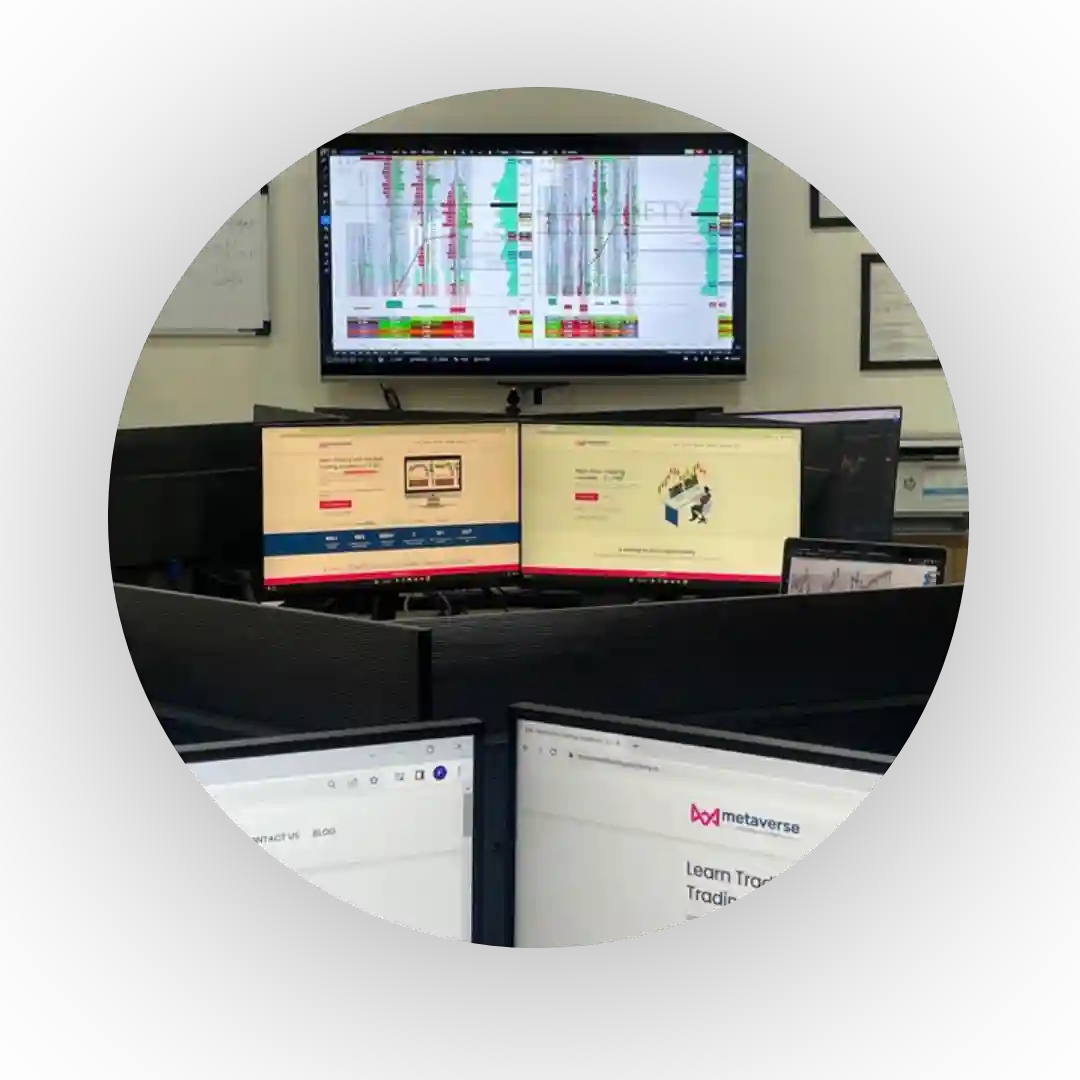
Metaverse Trading Academy is best trading academy in india to learn stock trading using order flow, market profile, volume profile, option chain etc.
Rajkot, Gujarat, India


Every new trader in India faces the same question within days of opening a demat account: should I use technical analysis in the stock market or fundamental analysis? The debate is fierce, the opinions are strong, and the internet is full of contradictory advice. One camp insists only company financials matter. The other swears that price charts tell you everything you need to know.
The truth is more nuanced and more useful than either extreme. Both approaches have proven track records, clearly defined strengths, and important limitations. The right choice depends entirely on your trading style, time horizon, and goals. This guide gives you a clear, practical breakdown of technical analysis in the stock market versus fundamental analysis, with real-world examples and an honest verdict on when to use each.
Technical analysis in the stock market is the study of past price and volume data to forecast future price movements. Technical analysts believe that all relevant information company news, earnings, macroeconomics is already reflected in the stock price. Therefore, studying the price chart itself is sufficient to identify high-probability trading opportunities.
Technical analysis is primarily a tool for timing answering the question of when to buy and sell rather than what to buy. For a comprehensive introduction to the discipline, our guide on what is technical analysis in trading covers all the foundational concepts in detail.
Modern technical analysis goes well beyond simple chart patterns. Tools like volume profile, market profile, and order flow trading give technically-oriented traders an institutional-level view of market structure that was unavailable to retail traders even a decade ago.
Fundamental analysis evaluates a company’s intrinsic value by examining its financial statements, business model, competitive position, industry dynamics, and macroeconomic environment. The core premise is that every stock has a true underlying value and that the market will eventually price the stock at or near that value.
Fundamental analysts look for stocks that are trading below their intrinsic value (undervalued) to buy, or above it (overvalued) to avoid or short. For a detailed foundation in this approach, our guide on what is fundamental analysis walks through all the key concepts and metrics.

The table below compares technical analysis in the stock market against fundamental analysis across the dimensions that matter most to traders and investors.
| 📊 Technical Analysis | 📋 Fundamental Analysis |
| Focuses on price and volume data | Focuses on company financials and valuation |
| Short to medium time horizon (minutes to weeks) | Medium to long time horizon (months to years) |
| Answers: WHEN to buy and sell | Answers: WHAT to buy and hold |
| Entry and exit precision is high | Entry timing is imprecise can be early by months |
| Works across all asset classes (stocks, F&O, crypto, forex) | Primarily used for equities and bonds |
| Results visible within days to weeks | Results visible within quarters to years |
| Ignores company quality any liquid stock can be traded | Company quality and business model are central |
| Requires less capital works for small accounts via F&O | Works better with larger capital for meaningful positions |
| High data availability charts are free and real-time | Research reports and financial models require time/tools |
| Suits active traders and shorter time horizons | Suits patient investors and longer time horizons |
The power of technical analysis multiplies when combined with advanced tools like VWAP trading strategies and delta divergence for spotting reversals institutional-grade techniques that give retail traders a genuine edge in Indian markets.
For investors who want to understand how professional fund managers combine fundamental and technical thinking, our article on the difference between trading and investing clarifies the distinct mindsets and time horizons involved.

| 📊 USE TECHNICAL ANALYSIS IN THE STOCK MARKET IF YOU ARE… |
| ✅ An active trader looking for short to medium-term opportunities (intraday to swing trading) |
| ✅ An options trader who needs precise entry and exit timing for F&O strategies |
| ✅ A beginner who wants faster feedback and a structured, rule-based approach |
| ✅ Someone with limited time who cannot read annual reports or attend investor calls |
| ✅ A trader focused on liquid large-cap and mid-cap stocks on NSE/BSE |
| 📋 USE FUNDAMENTAL ANALYSIS IF YOU ARE… |
| ✅ A patient long-term investor with a 3 to 10+ year horizon |
| ✅ Someone comfortable with illiquidity and slow-moving positions |
| ✅ An investor focused on building wealth through business ownership rather than price trading |
| ✅ Someone willing to read annual reports, attend AGMs, and follow management commentary |
| ✅ An investor with larger capital (Rs 10 lakh+) where transaction costs justify buy-and-hold |
The most profitable traders and investors in India do not choose one approach they combine both. Fundamental analysis identifies what to buy; technical analysis in the stock market tells you when to buy it. This combination dramatically improves both returns and risk management.
This approach, used successfully by many Indian institutional traders and HNI investors, works as follows:
For a step-by-step framework on selecting the right stocks using a combined approach, our detailed guide on how to select the best stocks for trading covers both fundamental filters and technical entry criteria in a single system.
Artificial intelligence is increasingly blurring the line between fundamental and technical analysis. AI tools can now scan thousands of earnings transcripts, news articles, and financial statements in seconds extracting sentiment signals that feed directly into technically-oriented trading models. Our articles on AI vs traditional technical analysis and how to use AI in trading tools and strategies explore this rapidly evolving frontier.

If you have decided that technical analysis is the right starting point which it is for most active traders in Indian markets here is a structured learning path to build genuine expertise.
Explore the Trading Mentorship Program
The debate between fundamental and technical analysis in the stock market is ultimately a false choice. Both disciplines offer genuine, proven value the difference lies in how and when you apply them. For active traders in Indian markets whether intraday, swing, or options traders technical analysis is the primary tool for decision-making, providing precise entry and exit rules, objective stop-loss placement, and a structured framework that removes emotion from trading.
Fundamental analysis remains invaluable as a filter helping you ensure that the stocks you are trading technically are not heading toward business deterioration or accounting fraud. The combination of both, applied with discipline and proper risk management, is the hallmark of consistently profitable traders.
Technical analysis studies historical price and volume data using charts, indicators, and patterns to predict future movements and identify buy or sell opportunities in financial markets.
Technical analysis suits active traders for timing entries, while fundamental analysis benefits long-term investors. Combining both helps select quality stocks and optimize buy and sell decisions.
Yes, beginners can learn technical analysis by starting with candlesticks, support-resistance, and moving averages, then practicing regularly through paper trading before entering live markets confidently.
Key tools include candlestick charts, support-resistance, moving averages, VWAP, volume profile, relative strength, options chain analysis, and order flow indicators for advanced trading decisions.
Yes, technical analysis helps options traders identify trends, entry points, stop-loss levels, and market sentiment using price action, indicators, and options chain data effectively.
AI enhances technical analysis by automating pattern recognition, fast backtesting, and combining market data with news sentiment, enabling faster decisions while still requiring human judgment.


Disclaimer: Investing/Trading in the stock market is subject to market risks, and there is no assurance or guarantee of returns—neither the principal nor the appreciation of the investments. The content/education/training provided by Metaverse Trading Academy, its institute, mentors, trainers, representatives, or their assigns is solely for general interest, educational purposes, and the reader’s information. All participants are requested to seek independent expert opinions before acting on anything mentioned in this course/program. We are not liable or responsible for any decisions made by the participant solely based on the information provided here. All information/views/opinions shared in the course/program are our interpretation for educational understanding only, and we cannot be held responsible for any miscommunication, misinformation, misunderstanding, or any actions taken by an individual or group based on the course/program. By enrolling in and accessing the program/course, you accept this “Disclaimer,” without limitation or qualification. Upon viewing this disclaimer, you understand and acknowledge that there is a very high degree of risk involved if any information is misinterpreted, misused, or applied without proper risk management and independent judgment. As stipulated by law, Metaverse Trading Academy cannot and does not make any guarantees about your ability to get results or earn money with any ideas, information, tools, indicators, systems, or strategies from the course/program. The participant should understand that all ideas, information, tools, strategies, examples, and market discussions shared during the course/program are for educational and informational purposes only. Metaverse Trading Academy, its founders, mentors, trainers, management, and team members are neither responsible nor liable for any losses, damages, or consequences resulting from investments or trading activities. You alone are fully responsible and accountable for your decisions, actions, trades, investments, and results in life. By registering here, enrolling in any program, or accessing any material, you agree not to attempt to hold Metaverse Trading Academy, its founders, mentors, trainers, management, or team liable for your decisions, actions, or results, at any time, under any circumstance.