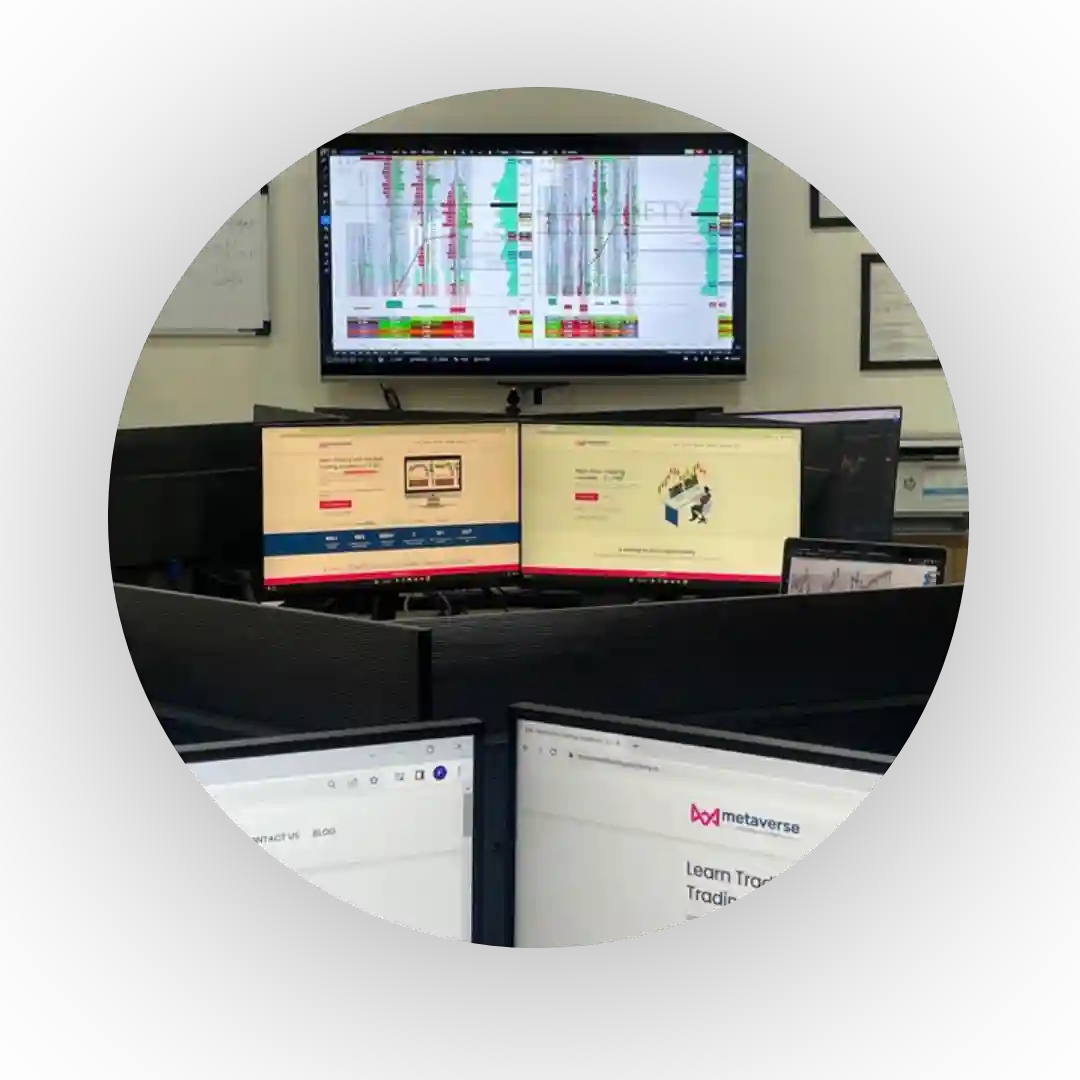
Metaverse Trading Academy is best trading academy in india to learn stock trading using order flow, market profile, volume profile, option chain etc.
Rajkot, Gujarat, India


What are Corporate Actions in Stock Market, and why do they move charts?
Corporate Actions in Stock Market change share count, price, or ownership structure. These actions include bonus issues, splits, dividends, and rights issues. Every listed company can announce them anytime through exchange filings. In simple terms, these actions reward shareholders or adjust capital structure. They do not always signal future performance. Understanding their mechanics protects your positions and chart reading skills.
Quick answer: Corporate actions are company decisions affecting shares directly. Bonus issues add free shares. Splits divide share price. Dividends pay cash. Rights issues offer discounted new shares to existing holders.
A corporate action is any company decision affecting shareholders directly. It can change share price, share count, or ownership percentage.

These actions get announced through official exchange filings first. NSE and BSE publish updated corporate action calendars daily. Traders should check these calendars before assuming normal price movement.
Understanding the difference between trading and investing helps you interpret these events properly.
Corporate actions generally fall into a few major categories. Each type affects your position differently on settlement.
Recognizing these patterns improves your technical analysis accuracy significantly.
A bonus issue gives shareholders extra shares for free. Companies use accumulated profits instead of paying cash.
For example, a one is to one bonus doubles your share count. The price usually adjusts downward to reflect this dilution. Your total investment value generally stays nearly unchanged.
Companies issue bonus shares to reward loyal, long term shareholders. It also improves stock affordability for new retail investors.
Higher share count often boosts trading volume afterward. This sometimes attracts fresh attention from market participants. Studying why most traders fail shows chasing bonus news blindly is risky.
A stock split divides one share into multiple smaller shares. The face value reduces, but total value stays similar.

For instance, a ten to one split creates ten cheaper shares. This makes the stock more accessible to small investors. Liquidity often improves significantly after a successful stock split.
Bonus issues use retained profits to create new shares. Stock splits simply divide existing shares without using profits.
Both increase share count and reduce individual share price. However, their accounting treatment differs completely behind the scenes. Reading about fundamental analysis helps you separate hype from real value.
A dividend is a cash payout from company profits. Shareholders receive this amount based on shares held.
Companies can declare interim or final dividends yearly. The record date decides who receives the actual payment. Buying after the ex date means missing that payout entirely.
Stock prices typically fall slightly after the ex dividend date. This adjustment reflects cash leaving the company’s books.
Long term investors often value consistent dividend paying companies highly. Short term traders should track trading charges in India before chasing dividend plays.
A rights issue offers new shares at discounted prices. Only existing shareholders can subscribe within a fixed window.
Companies use rights issues mainly to raise fresh capital. This helps fund expansion, repay debt, or strengthen balance sheets. Ignoring your rights entitlement may dilute your ownership percentage slightly.
Subscribing makes sense if you trust the company’s future. Skipping it may dilute your stake over time.
Always evaluate why the company needs fresh capital urgently. Reviewing risk management in trading helps you decide wisely here.
A buyback is when a company purchases its own shares. This reduces total shares available in the open market.

Companies often use buybacks when they hold surplus cash. It can also signal management confidence in future growth. Fewer outstanding shares may boost earnings per share figures.
Dividends distribute cash directly to every shareholder equally. Buybacks instead reduce share count through open market purchases.
Tax treatment differs between these two reward mechanisms significantly. Shareholders who do not sell remain unaffected by buyback taxation. Understanding trading charges in India helps you compare both options properly.
Corporate actions almost always trigger immediate price adjustments. Exchanges automatically modify the price on the ex date.
This adjustment is mathematical, not driven by sentiment alone. However, market reaction can still create extra volatility around announcements. Watching stock market volatility around these dates helps manage expectations.
Corporate actions can create misleading gaps on price charts. A bonus or split looks like a sudden crash visually.
Most charting platforms automatically adjust historical data for accuracy. Always confirm whether your chart shows adjusted or unadjusted prices. Using real time versus end of day charts wisely avoids confusion here.
Unadjusted charts can show fake support or resistance breaks. This confuses traders relying purely on price action.
Always cross check corporate action calendars before trusting unusual chart patterns. Learning support and resistance concepts properly reduces such errors.
Corporate actions directly affect your existing intraday and swing positions. Brokers usually adjust quantity and price automatically on settlement.

Futures and options contracts also get adjusted for fairness. Strike prices and lot sizes may change after major actions. Understanding options chain analysis helps you track these adjustments properly.
Margin requirements can shift after big corporate action announcements. Brokers may temporarily restrict leverage on affected stocks.
This protects both traders and brokers from sudden volatility. Reviewing intraday trading risks around these dates is genuinely important.
The record date decides final shareholder eligibility for benefits. The ex date is usually one day earlier.
Buying on or after the ex date excludes you completely. This single day difference often confuses many beginner traders. Always verify both dates directly from exchange announcements.
Settlement cycles also affect when shares actually reach your demat account. Knowing about the difference between trading and demat accounts clarifies this timing.
Dividends received are taxable income under current Indian rules. Bonus shares attract capital gains tax only when sold later.
Stock splits carry no immediate tax impact for holders. Buyback proceeds may face separate tax treatment depending on classification. Consulting a tax professional avoids costly filing mistakes later.
Corporate action announcements sometimes trigger sharp price movements. Excitement around bonus or dividend news drives quick buying.

Sometimes stocks even approach circuit limit levels temporarily. A stock market circuit filter can pause trading during extreme moves. This is part of how circuit breaker mechanisms protect investors broadly.
Operator driven stocks sometimes misuse corporate action announcements deliberately. They create artificial hype before genuine value creation happens.
Watch for stock manipulation signs like unclear announcement details. Verifying company fundamentals prevents falling for such traps. Exploring types of traders in the stock market helps identify risky behavior patterns.
Liquidity risk in stocks can increase near major announcement dates. Trading volume sometimes spikes unpredictably around these events.
This makes entries and exits trickier than usual sessions. Always size positions conservatively during such uncertain periods. Building discipline in trading habits protects you during volatile announcement windows.
Trading psychology matters greatly when reacting to sudden news. Excitement can push traders into impulsive, poorly planned entries.
Avoid chasing stocks purely because of bonus or split rumors. Confirm official filings before making any trading decision. Reading about FOMO and revenge trading helps control such impulses.
Tracking corporate actions properly requires checking reliable sources daily. Both exchanges publish updated calendars every trading session.
Beginners should also explore free paper trading apps before testing live reactions.
Strong risk management in trading prevents corporate action surprises. Diversify holdings instead of concentrating heavily around announcement dates.

Avoid excessive leverage on stocks announcing major capital changes. Always check historical volatility patterns before entering fresh positions. Exploring risk reward ratio in trading strengthens your overall decision making process.
Mergers combine two companies into a single listed entity. Shareholders usually receive new shares in a fixed ratio.
Demergers split one company into separate, independently listed businesses. Each shareholder gets shares in both resulting companies. These events often create temporary listing gaps during transition.
Your existing holding converts automatically based on the approved ratio. Brokers handle this adjustment without requiring manual action from you.
Price discovery for new shares can feel volatile initially. Watching institutional order flow helps gauge genuine demand after listing. Patience matters more than reacting to early price swings.
New traders often ignore corporate actions until facing confusion. Understanding these events early prevents avoidable, costly mistakes later.
This knowledge complements broader market education effectively. Pairing it with fundamental analysis builds a stronger trading foundation. Structured learning through NISM certification also strengthens your overall understanding.
According to SEBI’s official investor education resources, corporate actions require strict disclosure compliance. Exchanges like NSE India publish daily corporate action filings publicly. Reviewing BSE’s market data section regularly helps confirm pending announcements. Many traders also follow Moneycontrol’s market coverage for corporate action news. International readers can compare concepts using Investopedia’s explanation of corporate actions for added context.
You receive additional free shares automatically based on the announced ratio fixed by the company. Your total shareholding value generally stays similar, since price adjusts downward proportionally after record date.
No, a stock split only changes the share count and individual share price visible there. Your overall investment value remains nearly the same immediately after the split takes effect completely.
Yes, but selling shares before the official record date means forfeiting that specific dividend payment entirely. You must hold shares through the record date to qualify for eligible dividend payouts.
Your ownership percentage may dilute slightly since fresh new shares get issued to others. You can also sell your rights entitlement on the exchange if you choose not to subscribe.
Check official NSE and BSE websites directly for the latest corporate action calendars and announcement filings. Most brokers also display these details in your portfolio dashboard before record dates approach.
Corporate Actions in Stock Market shape price, charts, and positions. They reward shareholders but can confuse unprepared traders quickly.
Understanding bonus issues, splits, dividends, and rights issues matters greatly. Always verify dates before assuming unusual price movement signals trouble. Disciplined tracking remains your strongest protection against costly misunderstandings.
Explore our trading training programs and structured trading plans for consistent growth.


Disclaimer: Investing/Trading in the stock market is subject to market risks, and there is no assurance or guarantee of returns—neither the principal nor the appreciation of the investments. The content/education/training provided by Metaverse Trading Academy, its institute, mentors, trainers, representatives, or their assigns is solely for general interest, educational purposes, and the reader’s information. All participants are requested to seek independent expert opinions before acting on anything mentioned in this course/program. We are not liable or responsible for any decisions made by the participant solely based on the information provided here. All information/views/opinions shared in the course/program are our interpretation for educational understanding only, and we cannot be held responsible for any miscommunication, misinformation, misunderstanding, or any actions taken by an individual or group based on the course/program. By enrolling in and accessing the program/course, you accept this “Disclaimer,” without limitation or qualification. Upon viewing this disclaimer, you understand and acknowledge that there is a very high degree of risk involved if any information is misinterpreted, misused, or applied without proper risk management and independent judgment. As stipulated by law, Metaverse Trading Academy cannot and does not make any guarantees about your ability to get results or earn money with any ideas, information, tools, indicators, systems, or strategies from the course/program. The participant should understand that all ideas, information, tools, strategies, examples, and market discussions shared during the course/program are for educational and informational purposes only. Metaverse Trading Academy, its founders, mentors, trainers, management, and team members are neither responsible nor liable for any losses, damages, or consequences resulting from investments or trading activities. You alone are fully responsible and accountable for your decisions, actions, trades, investments, and results in life. By registering here, enrolling in any program, or accessing any material, you agree not to attempt to hold Metaverse Trading Academy, its founders, mentors, trainers, management, or team liable for your decisions, actions, or results, at any time, under any circumstance.