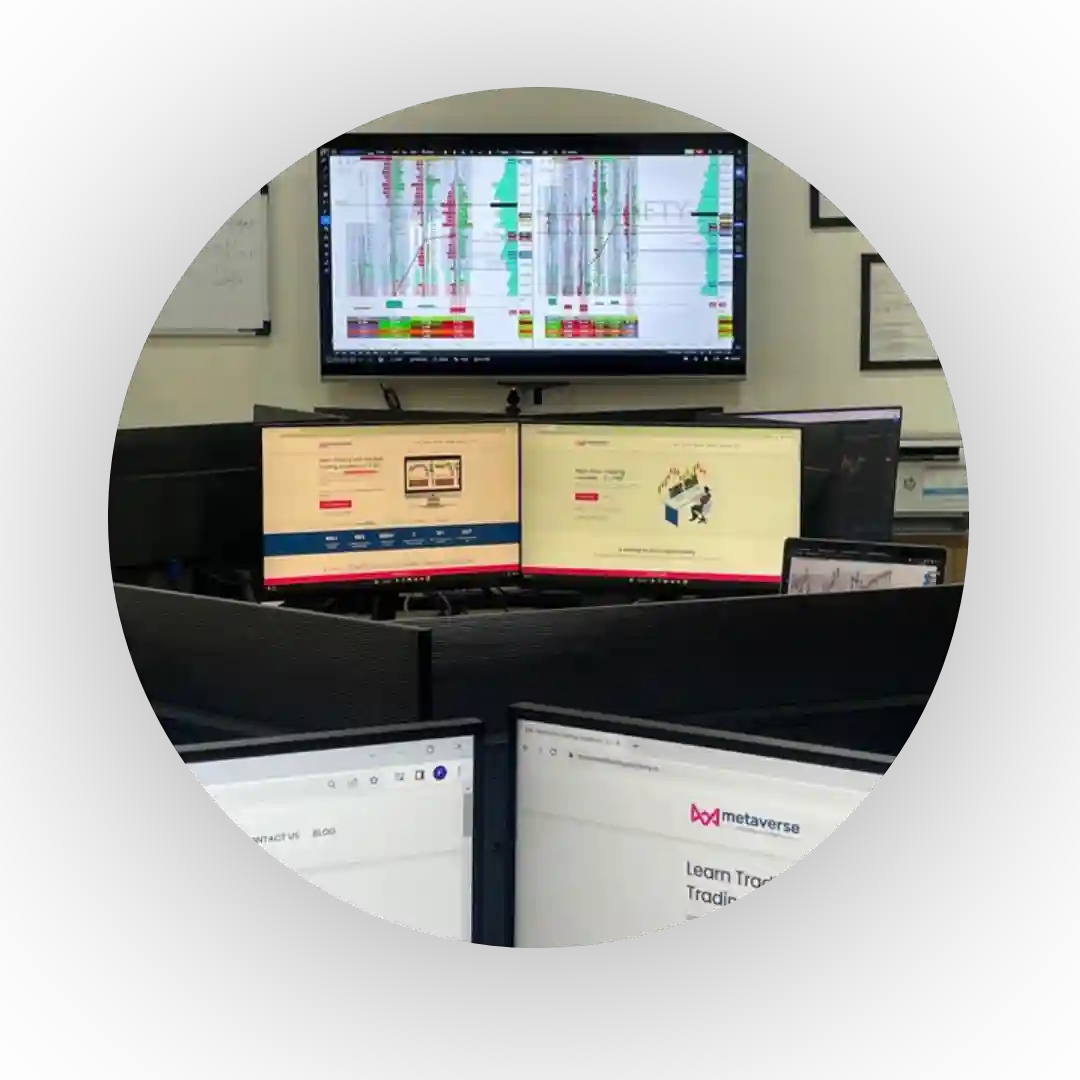
Metaverse Trading Academy is best trading academy in india to learn stock trading using order flow, market profile, volume profile, option chain etc.
Rajkot, Gujarat, India


Discipline in trading is the invisible force that separates consistently profitable traders from those who keep struggling despite having good strategies. In Indian stock markets, where emotions run high and volatility is frequent, discipline often matters more than technical knowledge.
Many traders know what to do—use stop-loss, follow risk–reward, avoid overtrading—but fail at doing it consistently. This gap between knowledge and execution is where most trading accounts break down.
In this article, we explore why discipline in trading is critical for long-term success, how lack of discipline harms traders, and how you can build disciplined trading habits that stand the test of time.

Discipline in trading means following your predefined trading rules consistently, regardless of emotions, market noise, or recent outcomes. It is the ability to stick to your plan even when fear, greed, or excitement tries to take control.
A disciplined trader:
Discipline is not about being rigid—it’s about being consistent.
Many traders spend years searching for the perfect indicator or strategy. But even the best strategy fails without discipline.
In reality:
Indian markets are full of distractions—Telegram tips, social media hype, sudden news, and operator-driven moves. Without discipline, traders jump between setups and abandon plans mid-trade.
As discussed in why most traders fail, inconsistency and emotional decision-making are bigger enemies than lack of knowledge.
Discipline in trading is closely tied to risk management. Knowing risk rules is useless unless you follow them strictly.
Disciplined traders:
Undisciplined traders, on the other hand:
If you want to understand this connection better, read our detailed guide on risk management in trading, which explains how disciplined execution protects capital over the long run.

Most blown trading accounts don’t fail slowly—they fail suddenly due to one or two undisciplined decisions.
Common discipline-related mistakes:
These behaviors are often emotional, not logical. Over time, they lead to drawdowns that are hard to recover from.
Our article on how to overcome FOMO and revenge trading explains why emotional discipline is crucial, especially for intraday traders.
One of the hardest parts of trading discipline is waiting. Markets are open every day, but good opportunities are limited.
Disciplined traders:
Undisciplined traders feel the need to be active all the time, which leads to low-quality trades.
Learning how to properly select stocks also improves entry discipline. Guides like how to select best stocks for trading help traders focus on quality over quantity.
Exiting trades is where discipline is tested the most. Many traders enter well but exit poorly due to fear or hope.
Disciplined exit behavior includes:
Losses are part of trading. Discipline in trading means accepting losses as business expenses, not personal failures.
This mindset shift is especially important when understanding the difference between trading and investing, as mixing the two often leads to poor exits.

Trading discipline is deeply connected to psychology. Fear, greed, ego, and overconfidence are constant challenges.
Psychological discipline involves:
Without mental discipline, even experienced traders make irrational decisions. Our guide on common trading psychology mistakes explains how emotional patterns quietly sabotage performance.
Discipline doesn’t come naturally—it is built through structure and repetition.
Ways to build trading discipline:
Many beginners benefit from practicing discipline without real money. Using demo or paper trading platforms allows traders to focus on process rather than profit. You can start with how to do trading with a demo account to build disciplined habits safely.
Discipline looks different across trading styles but remains equally important.
For intraday traders:
For swing traders:
Choosing a style that matches your personality improves discipline naturally. Understanding which trading is best for beginners in India helps traders avoid forcing unsuitable styles.

Short-term profits can happen due to luck, but long-term success comes only from discipline.
Discipline in trading ensures:
Markets will always be uncertain. Discipline gives traders stability within that uncertainty.
Discipline in trading means following your trading rules consistently, regardless of emotions or market conditions.
Discipline helps control risk, reduce emotional mistakes, and achieve consistent long-term results.
No. Even profitable strategies fail without disciplined execution.
By using demo trading, following a written plan, and avoiding overtrading.
Yes. Discipline matters more than indicators or strategies in the long run.
Discipline doesn’t eliminate losses, but it prevents large, account-damaging losses.
Discipline in trading is not about perfection—it’s about consistency. The market rewards traders who follow rules, manage emotions, and respect risk over those who chase quick profits.
Long-term success in trading is built slowly, through disciplined decisions made every single day. Strategies evolve, tools change, but discipline remains timeless.
At Metaverse Trading Academy, we believe discipline is the true edge in trading. Keep learning, stay patient, and focus on process over profits.
Metaverse Trading Academy empowers traders with AI-driven education, trading psychology insights, and practical investment strategies for India’s evolving market.
Learn more at https://metaversetradingacademy.in


Disclaimer: Investing/Trading in the stock market is subject to market risks, and there is no assurance or guarantee of returns—neither the principal nor the appreciation of the investments. The content/education/training provided by Metaverse Trading Academy, its institute, mentors, trainers, representatives, or their assigns is solely for general interest, educational purposes, and the reader’s information. All participants are requested to seek independent expert opinions before acting on anything mentioned in this course/program. We are not liable or responsible for any decisions made by the participant solely based on the information provided here. All information/views/opinions shared in the course/program are our interpretation for educational understanding only, and we cannot be held responsible for any miscommunication, misinformation, misunderstanding, or any actions taken by an individual or group based on the course/program. By enrolling in and accessing the program/course, you accept this “Disclaimer,” without limitation or qualification. Upon viewing this disclaimer, you understand and acknowledge that there is a very high degree of risk involved if any information is misinterpreted, misused, or applied without proper risk management and independent judgment. As stipulated by law, Metaverse Trading Academy cannot and does not make any guarantees about your ability to get results or earn money with any ideas, information, tools, indicators, systems, or strategies from the course/program. The participant should understand that all ideas, information, tools, strategies, examples, and market discussions shared during the course/program are for educational and informational purposes only. Metaverse Trading Academy, its founders, mentors, trainers, management, and team members are neither responsible nor liable for any losses, damages, or consequences resulting from investments or trading activities. You alone are fully responsible and accountable for your decisions, actions, trades, investments, and results in life. By registering here, enrolling in any program, or accessing any material, you agree not to attempt to hold Metaverse Trading Academy, its founders, mentors, trainers, management, or team liable for your decisions, actions, or results, at any time, under any circumstance.