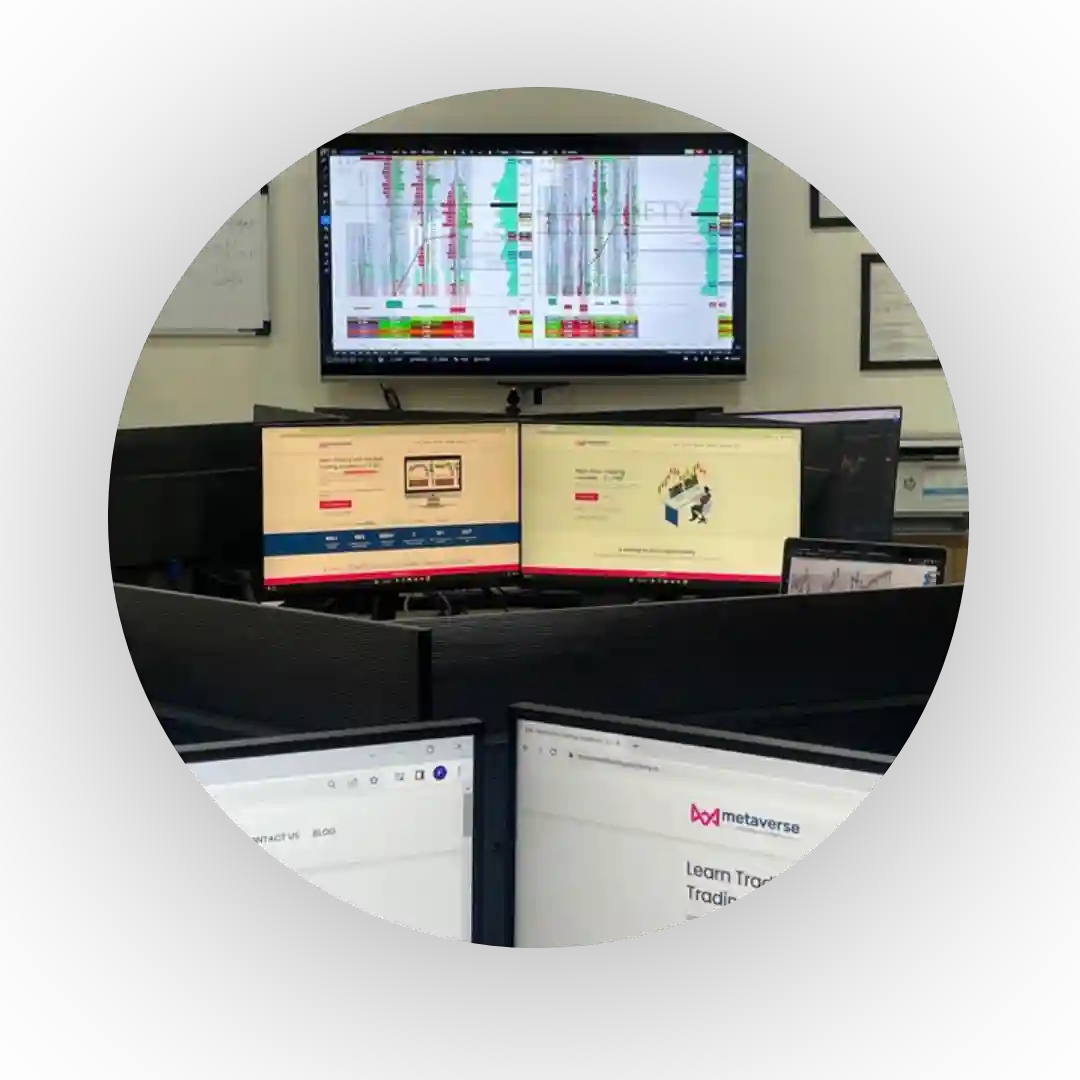
Metaverse Trading Academy is best trading academy in india to learn stock trading using order flow, market profile, volume profile, option chain etc.
Rajkot, Gujarat, India


Risk management in trading is the foundation of long-term success in the stock market. While most traders focus on indicators, strategies, or stock selection, professional traders know that capital protection always comes first.
In Indian markets like NSE and BSE, where volatility, news events, and emotional retail participation are common, poor risk management can destroy months of hard work in a single trade. This is why understanding risk management in trading is essential for beginners as well as experienced traders.
In this guide, we break down how traders protect capital using proven risk management principles, practical examples, and discipline-driven rules used by professionals.

Risk management in trading refers to the structured process of identifying, measuring, and controlling potential losses before entering any trade. Instead of chasing profits blindly, traders focus on limiting downside risk.
At its core, risk management answers one question:
How much am I willing to lose if this trade fails?
Key components of risk management include:
Losses are inevitable in trading. Risk management ensures those losses are small, controlled, and recoverable.
Many traders spend years searching for the “perfect” strategy. However, even the best strategy fails without proper risk management.
Indian stock markets are influenced by:
Without risk control, traders often:
As explained in our guide on why most traders fail, lack of risk discipline—not strategy—is the biggest reason behind consistent losses.
Professional traders survive because they protect capital first and let profits follow.
Capital is a trader’s lifeline. Once capital is lost, opportunities become irrelevant.
Successful traders treat capital like business inventory:
In India, many traders lose money during high-volatility events like Budget Day, RBI policy announcements, or expiry sessions due to poor risk planning.
Risk management in trading ensures longevity. Survival is success in the early stages of trading.

Position sizing determines how much quantity you trade. It directly controls how much you lose when a stop-loss is hit.
Instead of choosing quantity randomly, professional traders calculate position size based on:
A widely used rule is risking 1%–2% of total capital per trade.
Example:
Position size = ₹1,000 ÷ ₹10 = 100 shares
This simple calculation prevents emotional overexposure and keeps drawdowns manageable. If you’re starting out, practicing this on a demo account helps—read how to do trading with a demo account to build discipline without risking real money.
A stop-loss is a predefined exit point where you accept a small loss and exit the trade. It is the most important tool in risk management in trading.
Common types of stop-loss:
Professional stop-loss rules:
In volatile Indian stocks and options, ignoring stop-loss is one of the fastest ways to blow up capital.

Risk–reward ratio compares how much you are risking versus how much you aim to gain.
Common professional ratios:
Example:
With a 1:2 risk–reward ratio, even a 40% win rate can be profitable over time. Traders who ignore this concept often struggle despite having a high accuracy.
Risk management in trading is about probability and expectancy—not prediction.
Diversification reduces exposure to sudden stock-specific or sector-specific risks. However, over-diversification can dilute focus and increase mistakes.
Smart diversification means:
Overtrading is equally dangerous. Many traders take low-quality trades due to boredom or FOMO, which increases transaction costs and emotional fatigue. Learning how to overcome FOMO and revenge trading plays a major role in effective risk control.
Intraday trading carries higher risk due to leverage, speed, and volatility.
Intraday-specific risk management rules:
Professional intraday traders stop trading after hitting their daily loss limit. This rule alone saves more capital than any indicator.
Understanding which trading is best for beginners in India can help new traders choose styles with manageable risk.

Derivatives amplify both profits and losses. Without strong risk management, futures and options trading can be extremely damaging.
Key risk management principles:
Options traders especially benefit from understanding volatility and risk exposure. Our detailed guide on options chain analysis helps traders assess risk more accurately.
Most trading losses are psychological, not technical.
Common emotional risks:
Psychological risk management includes:
As discussed in common trading psychology mistakes, controlling emotions is as important as controlling position size.
Even experienced traders sometimes repeat basic errors:
Risk management in trading is effective only when applied consistently, not occasionally.
Risk management in trading is the process of controlling potential losses using position sizing, stop-loss, and disciplined decision-making.
It protects capital, prevents large drawdowns, and allows traders to stay consistent over time.
Most professional traders risk only 1%–2% of their total trading capital per trade.
Yes, stop-loss is essential to protect capital and avoid emotional decision-making.
No, but it ensures losses are controlled and profits can compound sustainably.
Yes, intraday trading requires stricter risk limits due to leverage and volatility.
Risk management in trading is not optional—it is the skill that determines survival and long-term success. Strategies may change, indicators may evolve, but disciplined risk control remains constant.
By focusing on capital preservation, position sizing, stop-loss discipline, and emotional control, traders can navigate Indian markets with confidence and consistency.
At Metaverse Trading Academy, we believe smart trading begins with protecting capital first. Keep learning, stay disciplined, and trade responsibly.
Metaverse Trading Academy empowers traders with AI-driven education, trading psychology insights, and practical investment strategies for India’s evolving market.
Learn more at https://metaversetradingacademy.in


Disclaimer: Investing/Trading in the stock market is subject to market risks, and there is no assurance or guarantee of returns—neither the principal nor the appreciation of the investments. The content/education provided by the institute, mentors, or their assigns is solely for general interest, educational purposes, and the reader’s information. All participants are requested to seek independent expert opinions before acting on anything mentioned in this course/program. We are not liable or responsible for any decisions made by the participant solely based on the information provided here. All information/views/opinions in the course/program are our interpretation, and we cannot be held responsible for any miscommunication, misinformation, or any actions taken by an individual or group based on the course/program. By enrolling and accessing the program/course, you accept the “Disclaimer,” without limitation or qualification. Upon viewing this disclaimer, you understand and acknowledge that there is a very high degree of risk involved if the information is misinterpreted. As stipulated by law, the institute cannot and does not make any guarantees about your ability to get results or earn money with ideas, information, tools, or strategies from the course/program. The participant should know that all the ideas, information, tools, or strategies shared during the course/program are for educational and informational purposes only. Asmita Patel Global School of Trading, Asmita Patel, and her team are neither responsible nor liable for any losses resulting from investments. You alone are responsible and accountable for your decisions, actions, and results in life. By registering here, you agree not to attempt to hold us liable for your decisions, actions, or results, at any time, under any circumstance.